
Like wombats and wildebeests, cancer cells are continually adapting to their environment. If that environment includes drugs meant to kill cancer cells, some cells may adapt so well, they eventually gain the ability to grow and divide in spite of those drugs – a process known as drug resistance. The result can be a resurgence of tumors that once were held in check by treatment.
Cancer research
Why Do Scientists Use Zebrafish to Study Cancer?
Cancer scientists use a wide variety of techniques to study the growth and development of tumor cells. Laboratory research often focuses on individual cells or tissue samples, but to learn how cancers grow and respond to therapies in living organisms, scientists rely on other experimental models. In recent years, zebrafish have become the model of choice for studying many cancer types. Dana-Farber’s A. Thomas Look, MD, who uses zebrafish in his own work, explains why.
Doctor/patient team fight rare cancer
By Karen Lee Sobol
I recently learned that the word “patient” shares a Latin root with the word “compassion.”
Any one of us can become a patient, for a number of reasons. For me, hearing a diagnosis of Waldenström’s macroglobulinemia flipped a switch. I became a patient in a big way.
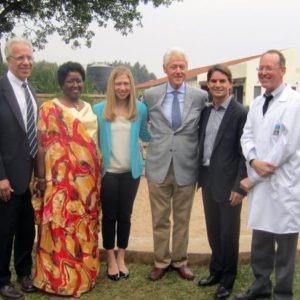
Opening of cancer center in Rwanda is “privilege beyond words”
The dirt roads in northern Rwanda now lead to a cancer center where patients can receive care for a disease that was, until now, considered a death sentence there. The Butaro Cancer Center of Excellence, which was dedicated on July 18, has allowed Dana-Farber/Brigham and Women’s Cancer Center to extend a helping hand in this tiny, densely populated country in Africa.
Teens and young adults overlook skin cancer risk
The call of the beach is hard to ignore on sunny summer days. Yet many teens and young adults do not follow protection tips when they hit the sand. They remain the most difficult age group to convince that ultraviolet (UV) rays, which come from the sun and indoor tanning venues, can cause cancer.
How are Genes Involved in Cancer?
Genes don’t cause cancer, but genetic mutations can. Our cells have about 22,000 genes, which consist of DNA packed into chromosomes inside the cell nucleus. These genes control a wide range of functions, including cell growth and division. When the genes misbehave or mutate, cancer can develop. Sometimes these mutations are inherited. In that case, … Read more
Meningioma: A tumor on the edge of the brain
Musician Sheryl Crow announced on June 5 that she has a benign brain tumor known as a meningioma. Below, doctors from Dana-Farber’s Center for Neuro-Oncology describe this condition. The singer-songwriter, a breast cancer survivor, visited Dana-Farber in 2006.
Meningiomas are tumors on the surface of the brain, spinal cord, and fluid spaces. They are the most common type of brain tumor, with approximately 55,000 new cases diagnosed annually in the United States.
Symptoms of Inflammatory Breast Cancer: Fact or Fiction
By Filipa Lynce, MD Inflammatory breast cancer is a rare but aggressive form of breast cancer that affects young women more than older women. Because it’s relatively uncommon — it represents less than five percent of all breast cancer cases — people are often confused about what inflammatory breast cancer is and how you can … Read more
Five reasons to be optimistic about the future of cancer treatment
It’s not always easy to recognize that we live in a golden age. Too often we fail to appreciate the amazing things going on around us because we‘re so caught up in day-to-day activities and pressing demands that we presume that the extraordinary is rather ordinary.
So it may be with cancer treatment in 2012. And the future looks to be even better – not necessarily easier, simpler, or cheaper, but unequivocally better.
Here are five reasons why.
A Life Saved by Second Opinions, Experimental Treatments, and a Touch of Luck
By James Bond “How long will I live?” I asked my oncologist in Ohio in 1992, when I was 44 and diagnosed with multiple myeloma. “Three years,” he answered. Instead, I enjoyed 10 more years of active living. Then my disease began to overtake me; my kidneys were failing, I was unable to eat solid … Read more
‘Encyclopedia’ charts genetics of cancer
The Encyclopedia Britannica may have published its last print edition, but a group of Dana-Farber scientists and their colleagues recently produced one of the first encyclopedias to help researchers determine which subtypes of cancer are likely to respond to current drugs.
The freely available, online encyclopedia lists hundreds of cancer subtypes – each with a unique set of genetic abnormalities that define it – along with drugs that are known to target those defects. The data, described alongside a similar catalog developed by another team of investigators, will guide researchers in designing clinical trials – improving the chances that the drug being studied will act against the particular genetic vulnerabilities within a tumor.
How do genes get their names?
Chinese scientists recently found a gene that encourages the growth of a form of lung cancer by switching on a circuit that includes a gene called sonic hedgehog. How do genes get their names? When a scientist discovers a new human gene, he or she submits a proposed name to the Human Gene Nomenclature Committee … Read more
Cancer research updates from AACR
The American Association for Cancer Research recently held its annual meeting in Chicago. Dr. Loren Walensky of Dana-Farber/Children’s Hospital Cancer Center talks about some of the highlights, including personalized medicine and a new grant that’s helping his team develop new technology to target cancer.
Counting cells at lightning speed
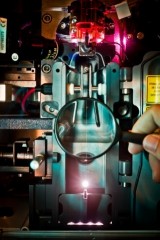 At many supermarkets, you can dump a pocketful of change into a machine that rapidly counts your coins, sorting them into pennies, nickels, dimes, and quarters and computing the total amount.
Imagine something similar in a research lab. In the past, cells had to be manually studied and counted under a microscope. But the development of flow cytometry technology, beginning in the 1960s and continually improving, has brought automation to counting and sorting human cells that’s reminiscent of the coin machine.
Flow cytometry today is routinely used in medical diagnosis of certain cancers, like lymphomas and leukemias, and as a powerful research tool for studying a host of different cell types and their interactions with drugs or the immune system.
“Investigators may be trying to look at a certain kind of cancer cell or immune system cell,” said Wayne Green, PhD, director of Dana-Farber’s Flow Cytometry Core Facility. “The analyzers can count the members of a certain subpopulation of cells, and then cull them so they can be grown in laboratory culture or used in gene expression studies.”
Men unite to cure women’s cancers
 For most people, getting involved with a cause means thinking about what type of organization they’d like to support. But this is a story about what happens when a cause selects you – taps you on the shoulder and asks you to engage in battle.
It began in 1998 when my wife Amy, then 40, was diagnosed with late-stage ovarian cancer. Our two daughters were 5 years and 15 months old. Amy battled for 15 months, and died in 1999. Like many spouses of women who die of cancer too young, my next few years were all about balancing the family boat.
Fast forward to three years later, when I met my current wife, Ruth. We married in 2005 and Ruth adopted my daughters.
Just one year later, Ruth’s mother, Mildred Moorman, was diagnosed with late-stage ovarian cancer and was treated at Dana-Farber by Dr. Ursula Matulonis. (She died earlier this year.) I had the opportunity to share our family’s story at a meeting of the Susan F. Smith Center for Women’s Cancers Executive Council at Dana-Farber.
Always a strong supporter of cancer research, I wanted to do more; to find people like me.
Alcohol and breast cancer: What’s the risk?
For many women who enjoy a glass of wine, research showing that relatively small amounts of alcohol can raise their risk of breast cancer are disconcerting, to say the least. And confusing, too.
How much drinking is OK? Isn’t a glass of red wine a day good for your heart — and couldn’t that be more important?
In the past five or 10 years, knowledge about alcohol and breast cancer has been changing as studies produce new results and are publicized, sometimes over-dramatically, in the media. At the same time, there’s growing evidence that moderate drinking can be healthy for the heart.
Specialists recommend regular colonoscopies
If you’re over 50, have you been screened for colorectal cancer? If not, the month of March would be a great time to talk about screening with your doctor. Colorectal cancer is the third leading cause of cancer in men and women in the United States. In 2012, an estimated 141,210 people will be diagnosed … Read more
From old drugs, new cancer treatments
When it comes to finding better drugs for cancer, Dana-Farber oncologist Dr. David Frank is not a patient man. While new cancer science promises to bring novel, improved therapies to the bedside, it can take many years — and Frank isn’t willing to wait.
“We need to get new treatments to patients as soon as possible,” he says.
When Doctors Encounter Diseases without Names
The complicated meaty machine that is the human body can break down in a remarkable variety of ways. The 9th edition of the International Classification of Diseases (ICD-9) includes more than 16,000 afflictions – everything from the bite of a venomous tropical millipede to injury by falling spacecraft debris. With all of these dangers, it is … Read more
Genetic counseling now recommended for children with sarcoma
 If your son or daughter has been diagnosed with a type of sarcoma – a tumor in connective tissue like muscles or bones – there are many questions: Will my child make a full recovery? What are the immediate and long-term side effects of treatment?
Most parents don’t consider whether their child will face a second cancer later in life.
However, a link between sarcomas and Li-Fraumeni syndrome, a rare condition that raises a person’s risk of developing one or more cancers to as high as 85 percent, has led genetic specialists at Dana-Farber/Boston Children’s Cancer and Blood Disorders Center to recommend that all child sarcoma patients be offered genetic counseling for Li-Fraumeni syndrome.